Floral wealth of Northeast India


North
East India is known for its lush greenery, abundance of flora and
fauna. When it comes to the flowers of North East India, the region
indeed comes blessed and decked with the floral bounty and beauty of
some very rare floral species, especially orchids which would indeed
fascinate you with the heavenly riot of colors that they create.
The
flower named Orchid belongs to the family Orchidaceae which is a large
family of Angiosperms. There are more than 25,000 species of Orchids and
many thousands more remain unclassified. The Botanical Garden of Kew
has 800 species and all of these species are found in North Eastern
India.
Here are some of the prominent species of Orchids of North East India:
Red Vanda:
Red Vanda is one of the prettiest orchids found in North East India.
Assam has more than 292 species of Orchids and this is about 42% of
total variety of Orchids found in North East. The Lakhimpur district
which is at the base of Arunachal Pradesh has beautiful varieties of
orchids. These gorgeous blooms are most prominent in April to May

Fox Tail:
 Fox
Tail is an Orchid Flower that is found in North East India and its
delicate bushy shape has earned its name as “Fox tail” or the Seeta
Pushpa as it is called in Sanskrit. The scientific name of the flower is
Inflorescence Rhynchostylis Retus and local Asameese folks call it the
Kopou Phul. The flowers are extremely beautiful and are colored pure
pink with deep spots of pink. The flowering season is between April to
May.
Fox
Tail is an Orchid Flower that is found in North East India and its
delicate bushy shape has earned its name as “Fox tail” or the Seeta
Pushpa as it is called in Sanskrit. The scientific name of the flower is
Inflorescence Rhynchostylis Retus and local Asameese folks call it the
Kopou Phul. The flowers are extremely beautiful and are colored pure
pink with deep spots of pink. The flowering season is between April to
May.
Aerides Odoratum: Aerides
Odoratum is a delicately colored white pink bloom that has a rare
ethereal beauty. In India these flowers are known as Draupodi Pushpa and
this is one of the rare forms of orchids that love the sun. This flower
is found at an elevation of 200 to 1800 meters of evergreen forests.
The flowering season is a little late i.e. between May to July.
Eria Fragrans:
 Eria
Fragrans, another orchid type is found in North East India specifically
in Manipur and Mizoram. This flower is partly an epiphyte and partly
lithophytes and grows between the sea level and a total elevation of
1200 meters. The flowers have a delicate star like shape with a sweet
clinging fragrance. The flowering months are between June to July.
Eria
Fragrans, another orchid type is found in North East India specifically
in Manipur and Mizoram. This flower is partly an epiphyte and partly
lithophytes and grows between the sea level and a total elevation of
1200 meters. The flowers have a delicate star like shape with a sweet
clinging fragrance. The flowering months are between June to July.
Plantexplorer.longwoodgardens.org
Dendrobium Fimbriatum:
Dendrobium Fimbriatum is a lovely pendulous yellow flower that is a
warm epiphyte or a lithophyte. This flower cannot survive in the higher
mountainous climes and so is mostly found in the lowlands of Sikkim and
North Bengal. The flowers have a mild citrusy smell and each bloom lasts
for about one week.
Arundina Graminifolia: Arundina
Graminifolia is a beautiful purple bloom that has a thin and tall
bamboo plant which has a long graceful stem. This is a tropical
monopodial flower which is a rare form of terrestrial orchid that is
found only in the warmer climes of North East India. The flowers have a
pendulous structure and a deep yellow off center which offsets its
beauty. The flowering season is between May to September.
Cymbidium Alofolium: Cymbidium
Alofolium is found in the plains of Assam and it abounds in deciduous,
ever green and semi deciduous forests. The flowers are strikingly
beautiful and colored pale yellow with iridescent red stripes on its
body. There are only 4-5 leaves on each plant per growth cycle. This
flower is recognized internationally for its tendency of forming root
systems on the rotting wood. The flowering season of these flowers is
between April to June.

Phaious Tankervillae:
 This
terrestrial orchid is a warm skinned native of Assam and Arunachal
foothills and these orchids are found in moist and shady areas. This
orchid variety is used extensively as a potted plant in local homes.
Interestingly local women smoke these flowers and use them as a
contraceptive. The flowers abundantly bloom between the months of April
and June.Robiquetia
Spathulata is a semi terete leafed flower and it is an epiphyte which
grown in the cooler areas of Assam, Eastern Himalayan Range and China
border. This flower is found in large quantities in the evergreen
riverine lowland areas at a total elevation of 400 and 800 meters. The
inflorescence flowers are pendulous shaped. The flowering season is
between June to August.
This
terrestrial orchid is a warm skinned native of Assam and Arunachal
foothills and these orchids are found in moist and shady areas. This
orchid variety is used extensively as a potted plant in local homes.
Interestingly local women smoke these flowers and use them as a
contraceptive. The flowers abundantly bloom between the months of April
and June.Robiquetia
Spathulata is a semi terete leafed flower and it is an epiphyte which
grown in the cooler areas of Assam, Eastern Himalayan Range and China
border. This flower is found in large quantities in the evergreen
riverine lowland areas at a total elevation of 400 and 800 meters. The
inflorescence flowers are pendulous shaped. The flowering season is
between June to August.
Calanthe Masuca:
This beautiful flower is found in Sikkim and Assam and at temperate
forests which are at an elevation of 2000 meters to 2800 meters. These
are Orchid hybrids ad there are more than 100,000 hybrids of Orchids
existing in the world. The deep verdant jungles at the foot hills of
Arunachal Pradesh has lovely hybrids of Calanthe Mausca and Calanthe
Fucata and the flowers bloom between the months of June to August. The
flowers may be yellow or purple in colour and they are very pretty.
Incidentally Arunachal has some of the loveliest flora of North East.
Liparis Plantaginea:
This is a species found in Arunachal Pradesh, Sikkim, Assam and
Nagaland and this beautiful plant flowers between June to August. There
are beautiful pseudobulbs of this plant and all of them are covered by
luscious leafy sheaths. This pretty plant remains full of flowers for
about 25 days and they are grown in the gardens of most locals living in
the North East.
Dendrobium Nobile:
 This
is an epiphyte which is found in the Eastern side of Himalayas, Assam
and Nepal border. The primary areas where these flowers are found are at
an elevation of 200 to 2000 meters. The flowers are small, sparkly and
light purple colored with a deep iridescent purple colour. The flowering
period of the Dendrobium Nobile is between March to say.
Hu.wikipedia.org
This
is an epiphyte which is found in the Eastern side of Himalayas, Assam
and Nepal border. The primary areas where these flowers are found are at
an elevation of 200 to 2000 meters. The flowers are small, sparkly and
light purple colored with a deep iridescent purple colour. The flowering
period of the Dendrobium Nobile is between March to say.
Hu.wikipedia.org
Cymbidium Pendulum: This
is a lovely bloom that flowers n the lowlands of Assam and the lower
elevation areas of Manipur, Mizoram. This Cymbidium Pendulum is actually
lithophytes which cannot survive in higher elevations. The flowering
season of these blooms is between June to August and they are found in
elevations up to 1630 meters. The blooms are large with splattering of
yellow, pink and purple in them.
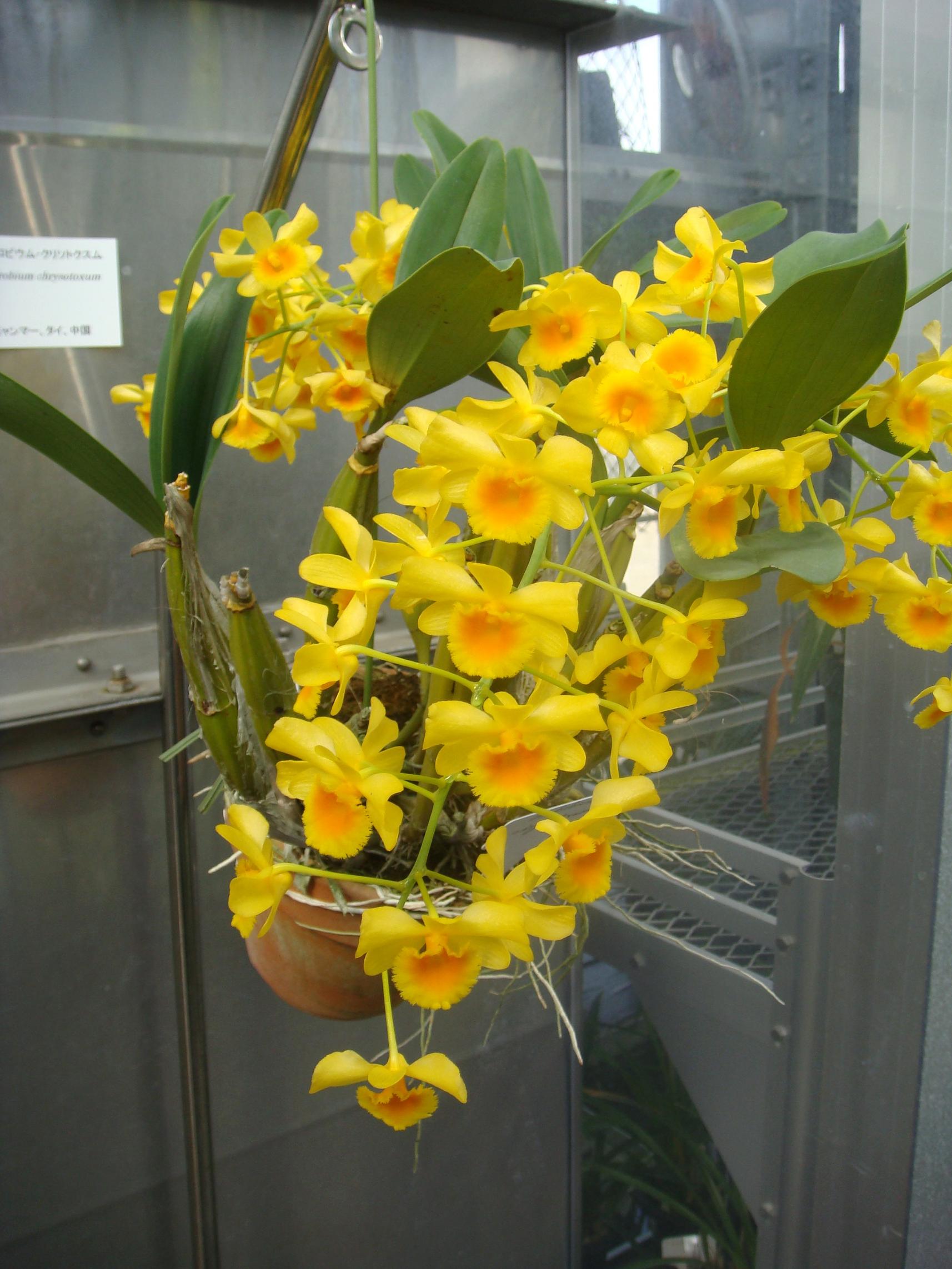
Dendrobium Chrysotoxum: The
Dendrobium Chrysotoxum is a rare kind of orchid which has a very long
inflorescence. Rising up from the apex of the pseudo bulb of the flower.
The flowers are large, fragrant and colored a lovely Papaya colour. The
scent of these blooms is so strong is so strong that they attract
insects and butterflies from all around the surrounding areas. These
flowers bloom in the peak of summer i.e. May.
Dendrobium Aphyllum:

This
is a lovely epiphyte which is mostly found in Nepal border, Assam,
Bangladesh border, Eastern Himalaya region etc. This is a plant which
lives in the mixed type of deciduous forests and the blooms flower on
the nodes of the leafless stems. At the time of flowering season the
whole plant is full of light rose colored blooms with a center which is
light yellow in colour. The lip is graceful with a pubescent shape and
the mixed deciduous forests contain a large proportion of these flowers.
The total effect of these flowers is like a light snowfall which dots
the forests of Assam and makes them look ethereally beautiful. The
blooming period is between March to May.
Dendrobium Jenkisii:
These flowers are a type of miniature species which are actually a type
of tree fern. From a distance these flowers look like they are mounted
on a piece of cork that is bloated with water. Jenkisii is an
intermediate stage flower which requires a lot of good light and
ventilation. These small flowers are found in Assam, Eastern Range of
Himalayas and the border of Nepal. An officer named Jenkinsii who was
the officer of East India Trading Company in early 1800 was credited
with the discovery of this flower. These blooms are commonly found in
the peak summer months of April and May.
Gastrochilus Desypogon:
 This
is a plant which is warm growth epiphyte which is monopodium and found
in Assam, Eastern Areas of Himalaya, Nepal border etc. the preferred
elevation for these lovely aphid blooms is an elevation range between
300 meters to 1000 meters. The entire area of Lakhimpur district in
Assam is filled with these blooms in the months of June and July. The
flowers are cream and yellow with deep crimson centers that emanate a
light feathery fragrance. The flowers bloom in clusters like bunches of
ripe grapes.
This
is a plant which is warm growth epiphyte which is monopodium and found
in Assam, Eastern Areas of Himalaya, Nepal border etc. the preferred
elevation for these lovely aphid blooms is an elevation range between
300 meters to 1000 meters. The entire area of Lakhimpur district in
Assam is filled with these blooms in the months of June and July. The
flowers are cream and yellow with deep crimson centers that emanate a
light feathery fragrance. The flowers bloom in clusters like bunches of
ripe grapes.
Dendrobium Primulinum:
 The
pendant shaped epiphyte is bluish milk white in colour and is found in
huge concentration is Assam and the Eastern Himalayan Range. The flowers
bloom in the lush green deciduous forests from 500 meters to 1000
meters. The flowers are pink yellow, mildly fragrant and have a very
graceful shape. The flowers actually arise from near the modes along the
cans from where they bloom. Lots of sunlight is needed for the
Dendrobium Primilinium to bloom. The proper time for the flowers to
bloom is between March to April.
The
pendant shaped epiphyte is bluish milk white in colour and is found in
huge concentration is Assam and the Eastern Himalayan Range. The flowers
bloom in the lush green deciduous forests from 500 meters to 1000
meters. The flowers are pink yellow, mildly fragrant and have a very
graceful shape. The flowers actually arise from near the modes along the
cans from where they bloom. Lots of sunlight is needed for the
Dendrobium Primilinium to bloom. The proper time for the flowers to
bloom is between March to April.
Phhalaenopsis Mannii:
 This
is a small sized yet extremely beautiful orchid which is present in the
Eastern area of Himalayas, Assam and North Bengal. This is an Epiphyte
which is present in the tropical and the semi tropical areas which are
at a total elevation of 500 meters to 1500 meters in evergreen humid
forests. The flowering period is between the months of April to May.
These pretty orchids bloom in the shade near rivers and streams. The
flowering season for these orchids is between April to May.
This
is a small sized yet extremely beautiful orchid which is present in the
Eastern area of Himalayas, Assam and North Bengal. This is an Epiphyte
which is present in the tropical and the semi tropical areas which are
at a total elevation of 500 meters to 1500 meters in evergreen humid
forests. The flowering period is between the months of April to May.
These pretty orchids bloom in the shade near rivers and streams. The
flowering season for these orchids is between April to May.
Dendrobium farmer:
This
is a relatively rare form of Orchid that is found in parts of Eastern
Himalaya and Assam along with the Upper Tropical and the sub tropical
zones of North East India at the elevation of 150 meters to 1000 meters.
These flowers bloom on very high trees and are situated over the river
course and they bloom well in shade and areas which see heavy waterfall.
The pink and yellow white colored flower has a tip which is orbicular.
The blooming time is between April to May.
Phalaenopsis Parishii: The
miniature orchid which is an epiphyte that was discovered long back by
Rev C Parish who had subsequently sent sample of the flowers to Royal
Botanical Gardens. These pretty star shaped flowers have light yellow
metal parts over a clear white base. There is a brownish yellow center
on the lip too which offsets their delicate beauty. The flowering times
of these blooms are between March to April. The flowers are found at a
higher elevation up to 500 meters and usually sprout from the torso of
the tree.
Eria Ferruginea Lindl:
This is a warmth seeking epiphyte which can be classified as a thick
creeping Rhizome. It is found in great abundance in the places of Assam,
Jyantea Hills, Khasia and Arunachal Pradesh. The leaves are lanceolate
and are thick and coriaceous and are used by locals for medical
purposes. The flowers are delicate with an angular shape and are colored
pale white with pink lips. The flowers are beautifully scented too and
locals call it Rusty Eria which actually refers to the colour of
tomentose inflorescence. The blooming period is between June and July.
Thunia Alba:
This is a rare and beautiful flower which mostly prefers to bloom in
the shade. The flower is terrestrial and they also take well to a good
degree of watering. The flowers are white and pure and their tips are
yellow and orange. The flowers are sweet scented and white and are found
at an elevation between 100 meter to 2200 meters in North East India,
China border and Andaman’s. This flower is found in Manipur too and
there the blooms are known as Takhel Lei. There are about 6 different
species of these flowers and there is a very interesting fact about the
species of these flowers. The plant canes decompose by the third year
of its life as the rest of the plant devours it to use for fodder or
nutrients. Canes of the flowers can be softly placed on a bed of moss
and it is observed that many plants will grow from its nodes. The new
plants will start blooming in the next three years.
Dendrobium Moschatum:
The
blooming flowers are colored yellow, purple, pink, purple and musk
scented. These blooms which are yellow purple/ pink purple have a
pendulous shape and last only for about a week. This is a highly popular
flower harvested and grown by the locals in Arunachal Pradesh and the
stems of the flowers are used to make cane baskets. The flowers are also
roasted and eaten at times. The time of flowering is between June to
July and the preferred elevation of growth is between 300 meters to 900
meters. www.ufv.br
Eria Bractescens:
This
is a species of flowers that grows in trees in the lowland forests of
Assam and the adjacent hills of Arunachal. The flowers are light creams’
white with yellow shades on the petals. The blooms grow at elevations
ranging from between 20 meters to 1800 meters. The flowers generally
bloom between the months of March and April i.e. in spring. http://orchids.wikia.com/wiki/Eria_bractescens
Micromere Rostrata:
This is a very pretty orchid blooming in North East India and it grows
between forest elevations of 100 meters to 1200 meters. The flowers are
fragrant and shaped like shorter versions of the tube rose. The
inflorescence is Racemose in type and the flowers themselves are white
with a faint light purple shade to them. The blooming period is between
April to May. The flower has a very beautiful fragrance attached to it.
Pholidata Imbricata:
 The
flowers of Pholidata Imbricata are spread over the entire of North East
India. This is an epiphyte or lithophytes which are found at a huge
range of elevations right from the sea level to 1700 meters. The long
dropping inflorescence of the flower is of the type Receme and it arises
from the base of the pseudo bulb with more than 50 flowers sitting on
it. Locals call it the rattle snake orchid because of its peculiar
shape. The flower blooms in around June. http://hortuscamden.com/plants/view/pholidota-imbricata-roxb.-lindl
The
flowers of Pholidata Imbricata are spread over the entire of North East
India. This is an epiphyte or lithophytes which are found at a huge
range of elevations right from the sea level to 1700 meters. The long
dropping inflorescence of the flower is of the type Receme and it arises
from the base of the pseudo bulb with more than 50 flowers sitting on
it. Locals call it the rattle snake orchid because of its peculiar
shape. The flower blooms in around June. http://hortuscamden.com/plants/view/pholidota-imbricata-roxb.-lindl
Papilionanthe Teres:
This epiphyte with terete leaves is found in the North Eastern parts of
India, Bangladesh border and Nepal border. The blooms are large and
somewhat showy with a beautiful pale pink colour and a dash of crimson
on the flower lips. The blooms grow at an elevation of 500 m to 900 m.
the flowering season is between May to June. These blooms also grow in
Manipur where they are known as Cheitek Lei. Common name of Papilionathe
Teres is Cylindrical Vanda.
Acanthephippium sylhetense Lindl:
This is a forest species of flower that is found in the base hills of
Sikkim, Arunachal and Assam. The blooms grow at an elevation between 400
meters to 1500 meters. The Orchid has beautiful broad leaves and
requires direct sunlight to grow. The inflorescence of the flower rises
from a part of new growth and forms the base for several new flowers.
The flowering time of these blooms is between the months of June to
July.
Malaxis Acuminata:
This
is a warm climate preferring terrestrial plant that has a lot of
medicinal value. This plant is commonly known as Jivakam in Hindi and
Jivakah in Sanskrit. Apart from North East India the flowers are found
in Bhutan, Malaysia, Sumatra, Laos and Myanmar. There are lowland broad
leaved forests in Assam and Arunachal Pradesh that are at a total
elevation of 1500 meters and are full of Jivakah.
Malaxis
Acuminata is revered for its strong curative powers. The dried bulbs of
Malaxis Acuminata are used in many Ayurvedic medications. The bulbs are
sweet and act as a refrigerant and aphrodisiac. The diseases which
Jivakah can cure are haematemesis, seminal problems, fever, burning
discharge, emaciation and general debility. The flowering time is
between June to August.
Cymbidium Munronianum:
This is a very rare type of Orchid found in Lakhimpur and the adjacent
areas of Arunachal. There are only two types of orchids found in India
are aloifolium and pendulaum and they are reported from Lakhimpur. The
orchids have a highly fragrant scent and they are available in some
parts of Meghalaya too. The inflorescence of these flowers is vertical,
long and has 12 flowers on one side. Flowers are light green or purple
with an iridescent purple streak. Flower lasts for one month which is
one of the highest staying rates.
Lilies of North East
Dzuou Lily:
Another
of the wonderful blooms of North East India is the Dzukou Lily and it
is present in great abundance in the southern and western parts of
Nagaland. The Valley of Lilies is a burst of colors and it transforms
some parts of Nagaland completely between the months of June to
September. This specific form of lily was pointed out by Bikramjit in
the Department of Life Sciences in September 1991. The flower is
actually named after Bikramjit’s mother.
Siroi Lily:
Siroi
Lily is the state flower of Manipur and is believed by many to be the
most beautiful flower of Manipur. The Collector of plants and the
botanist Kingdom Ward Frank visited Manipur in 1946 and it was he who
first discovered this plant in the Ukhrul Area and subsequently named it
after his wife. The plant has ethereal pink white flowers and narrow
leaves and it blooms in June and July. Unfortunately this flower is now
under the endangered Species of Plants list.
Clerodendrum Species:
The
species of Clerodendrum Species is famous in North East India and it
also has an edible variety of species. The name Clerodendrum comes
straight from the Greek name “Chance” and the tree of Dendron. There is a
strong legend that the leaves of these trees have the powerful quality
of curing ailments. The ethnic tribe members of the tribes have used
Clerodendrum Colebrookianum for centuries as a cure for high blood
pressure. The flowers are large, colorful and showy attracts a lot of
insects and butterflies.